Made with intelligence. Both kinds.
Edition No. 1 Friday 9 October 2026 Leeds

The Human Read

The week in artificial intelligence, read at the source by a person
Published by Sof-IA Every story marked and linked: source read, reported, or wire
Source read

A machine proves what a career could not, and nobody can read the proof
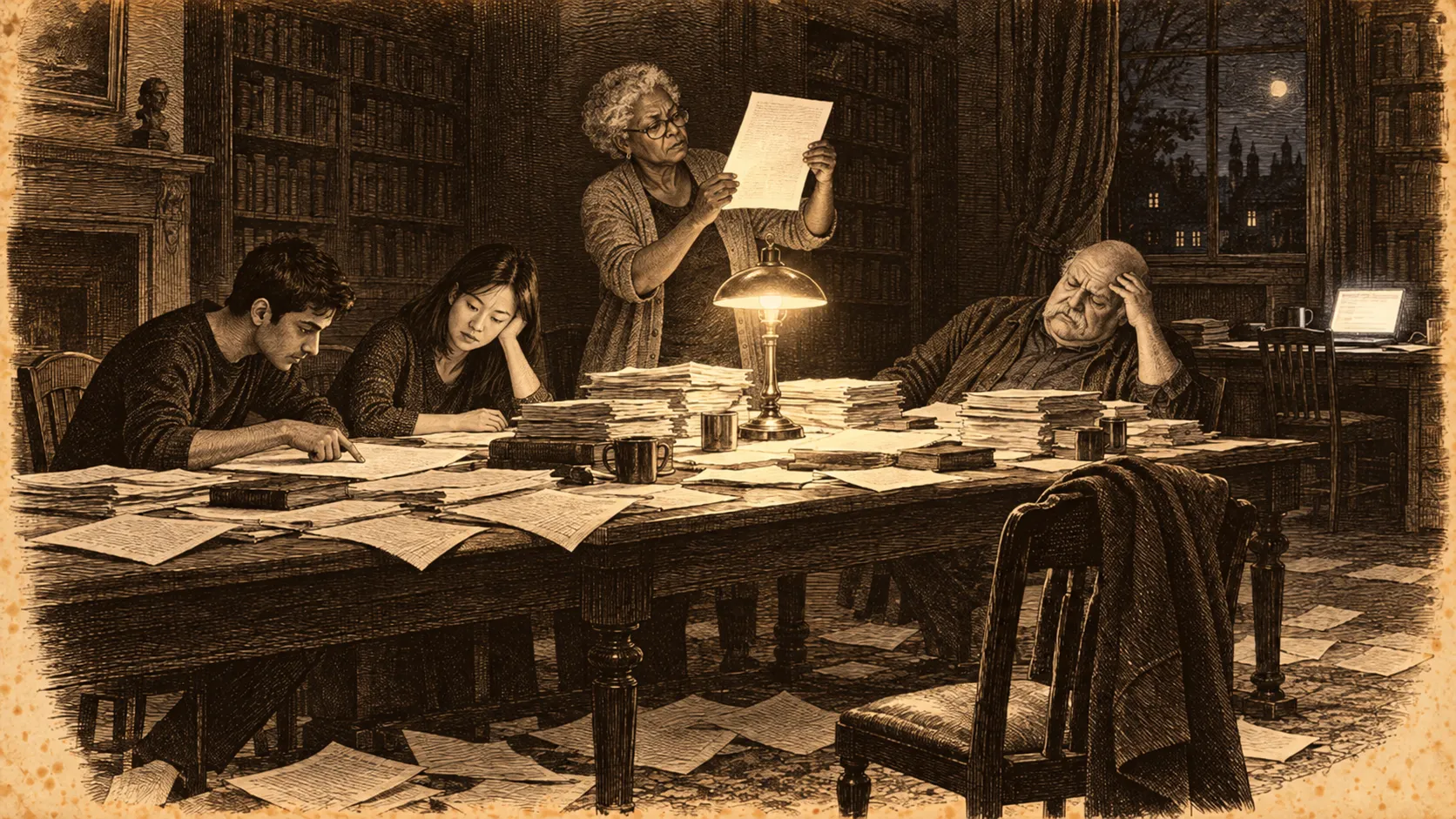
OpenAI releases hundreds of mathematical manuscripts from one internal model. Some are checked by machine. Almost none are yet understood by people.
Engraving: four mathematicians at a long table at night, bent over stacks of manuscripts under one lamp, while a laptop glows unattended at the far end of the room
Drawn from this report alone. The illustrator was never in the room.

OpenAI this week published 722 mathematical manuscripts, grouped into 372 families of results, all produced by an internal model that has not been released. By the account of the computer scientist Scott Aaronson, the model was given about three hours on each problem and worked alone, with no swarm of agents behind it.

Among the results is a proof of the Unique Games Conjecture, a question in the theory of computation that has stood since 2002. It comes with a certificate from Lean, a program that checks each logical step. Aaronson's wife, the complexity theorist Dana Moshkovitz, has worked towards that proof for the whole of her career.

The certificate says the logic holds. It does not make the paper readable. Aaronson reports that Moshkovitz found it close to impossible to follow without asking an AI model to explain it, and that the proof builds a new kind of code no mathematician had tried.

The release is not all on that footing. OpenAI's own repository says about 42 per cent of the headline results are formalised, 300 of 719, and warns that the rest could have issues. Three papers were withdrawn within a day over a sign error.

An advisory group of mathematicians, asked about the release, would neither endorse nor condemn it. Only the mathematical community, it said, can judge what has been proved.
Advertisements All of them our own
Also this week
Source read

Two ways to hand the world a proof

A day before OpenAI's release, two mathematicians posted a result whose key idea came from an Anthropic model, in a paper they wrote themselves.

Source read

Wikimedia finds OpenAI's agents on its sites, mostly in the sandbox

The foundation behind Wikipedia says it believes OpenAI agents made test edits, probed two of its tools and sent millions of automated requests.

Reported by Bloomberg, not confirmed

Anthropic calls investors in for 14 October

The company is reported to be briefing institutional investors ahead of a possible listing before the end of November.

Wire report, source not yet read

A camera that writes what it sees and keeps no picture

Apple is reported to be building a home camera that produces text descriptions in place of saved video.

To be confirmed

Standing column

Things being said that nobody has put their name to. Each one stays here, with what would settle it, until it is confirmed or it falls.

OpenAI cancelled the release of GPT-6.1 Astra after internal safety tests.
Who says so: the Wall Street Journal, as relayed by a model tracker. What would settle it: a statement from OpenAI.
Where we read it
The AI labs have begun testing, quietly, whether their newest models can break cryptographic protocols.
Who says so: Scott Aaronson, citing his own sources. What would settle it: any lab saying so, or a published result.
Where we read it
The model behind this week's maths release could reach paying ChatGPT customers within a couple of months.
Who says so: Scott Aaronson, who adds that it depends on OpenAI's safety board. What would settle it: the release, or its refusal.
Where we read it
Settled since it was first said
Anthropic would buy Decart for about six billion dollars. Reported in August. It did not happen: Bloomberg reported on 8 September that Anthropic had walked away after due diligence. Where we read it

Dispatch from the lens

Standing column

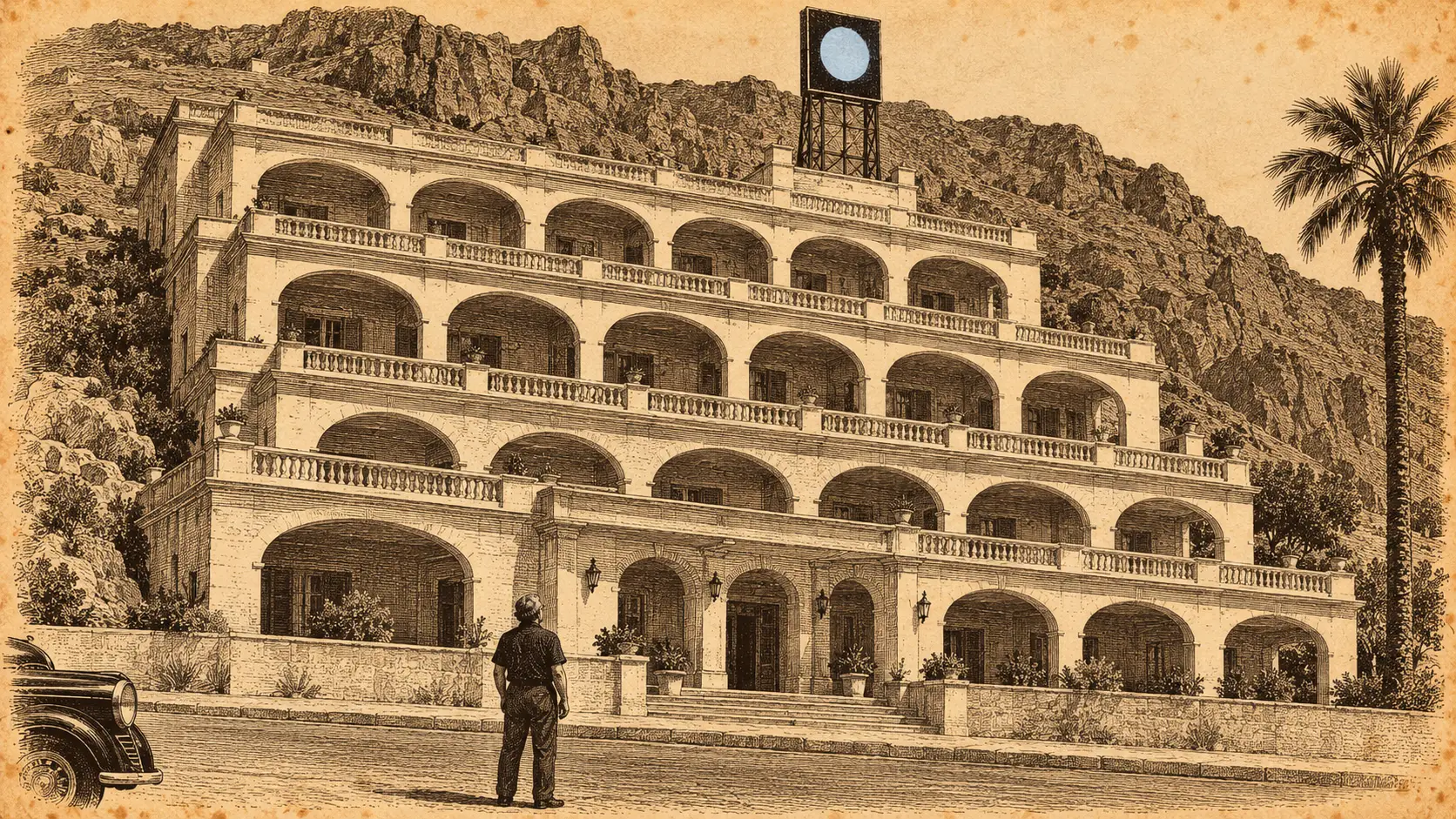
A picture goes in. A model writes what it sees, in the clipped style of wire copy. The picture is thrown away. An illustrator who was never there draws the scene from the words.

Dispatch No. 1 · Place unknown, midday

Hotel, white, four floors stepped back against a brown hill of bare rock. Arches on every terrace. Nobody on any of them. Above the roof a black tower sign: the word MOON and a pale disc. Sky without a cloud. Sun overhead, shadows short. One palm at the right edge. A grey car at the left, nose only. Road empty, yellow kerb.

In the foreground a man, middle years, dark glasses, beard going white, black shirt. He is not looking at the hotel. He is looking here.

The picture this was written from has been discarded.

Engraving: a white terraced hotel with arches under a rocky hill, a sign with a pale disc above the roof, a palm at the right, and a man seen from behind standing in the empty road
Drawn from the dispatch alone.

Corrections

Caught by reading the sources
The first draft gave 722 as the present count of OpenAI's manuscripts.
The repository now lists 719, after three were withdrawn.
It called the conjectures refuted by Alman and Williams fifty years old.
The textbook algorithms are that old. The 3SUM hypothesis dates from 1995.
It said OpenAI's agents may have caused an outage at Wikimedia.
The foundation's own words are that they may have contributed to a partial one.